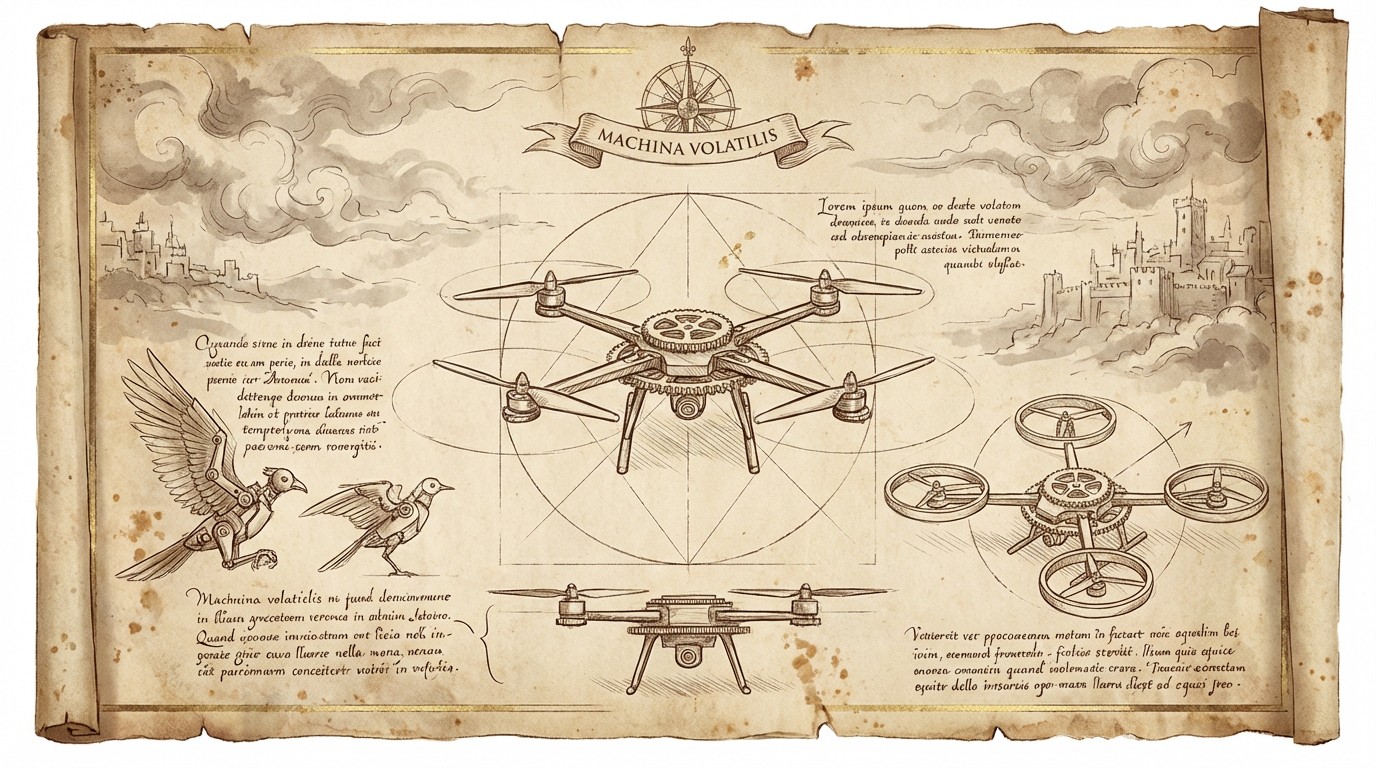
The battlefield has changed forever. Soldiers no longer need to be present to fight a war. Pilots no longer need to sit inside their aircraft to strike a target thousands of miles away. Today, a military operator can sit in an air-conditioned room on one continent and eliminate a target on another — all through the rise of drone warfare. Unmanned weapons are revolutionizing modern conflicts in ways that military strategists, world leaders, and ethicists are still struggling to fully understand.
This is not science fiction. This is the new reality of warfare — and it will only evolve further with each passing year.
What Is Drone Warfare? Understanding Unmanned Weapons in Modern Conflicts
Drone warfare refers to the use of Unmanned Aerial Vehicles (UAVs) — commonly called drones — as military weapons. These pilotless aircraft carry cameras, sensors, missiles, and explosives, and human controllers or artificial intelligence systems operate them remotely.
Unlike traditional warfare that requires boots on the ground or manned aircraft in the sky, drone warfare allows nations to project military power with minimal risk to their own personnel. This fundamental shift is what makes drone warfare so revolutionary — and so dangerous.
The rise of drone warfare is not a moment in time. It is an ongoing, accelerating transformation with no clear endpoint in sight.
Key types of military drones:
- Combat Drones (UCAV): Armed drones designed to strike targets — e.g., MQ-9 Reaper, Bayraktar TB2
- Surveillance Drones: Drones that gather intelligence and conduct reconnaissance
- Kamikaze Drones (Loitering Munitions): Drones that hover over an area and crash into targets on command
- Swarm Drones: Hundreds of small drones acting together as a coordinated weapon system
- Micro Drones: Tiny drones that operators deploy for urban warfare and close-range operations
History and Evolution of Drone Warfare: From Simple Planes to Lethal Machines
The Early Origins: World War I and II
Drone warfare didn’t begin in the 21st century. Its roots go back further than most people realize. The history and evolution of drone warfare stretches over a century of continuous military innovation.
The United States created the first unmanned aerial vehicles during World War I, developing the Kettering Bug in 1918 — an early aerial torpedo that flew on a preset course before crashing into its target. Though primitive, this device became the world’s first true unmanned weapon system.
During World War II, Nazi Germany used the V-1 flying bomb — a pilotless jet-powered aircraft — to bombard London. The United States also experimented with radio-controlled bombers that engineers loaded with explosives. These early experiments planted the seed for what would eventually become modern drone warfare.
The Cold War Era: Drones as Spy Tools
During the Cold War, drone warfare evolution took a surveillance-focused turn. The United States deployed unmanned reconnaissance drones extensively during the Vietnam War, flying over dangerous enemy territory to collect photographic intelligence without risking pilots.
By the later decades of the Cold War, Israel became a pioneer in modern drone warfare, using UAVs extensively in regional conflicts. Israel’s engineers — particularly those developing real-time video surveillance drones — built the groundwork for what military forces worldwide would later develop into lethal strike platforms.
Post-9/11: The Birth of Modern Armed Drone Warfare
The real revolution in drone warfare began after the September 11, 2001 attacks. Engineers quickly modified the Predator drone — originally a surveillance tool — to carry Hellfire missiles. The CIA soon used an armed Predator to conduct what military historians widely consider the first modern drone strike in Afghanistan.
This marked a historic turning point. Drone warfare no longer focused on watching — it focused on killing, precisely, from a distance, with minimal risk to the attacker.
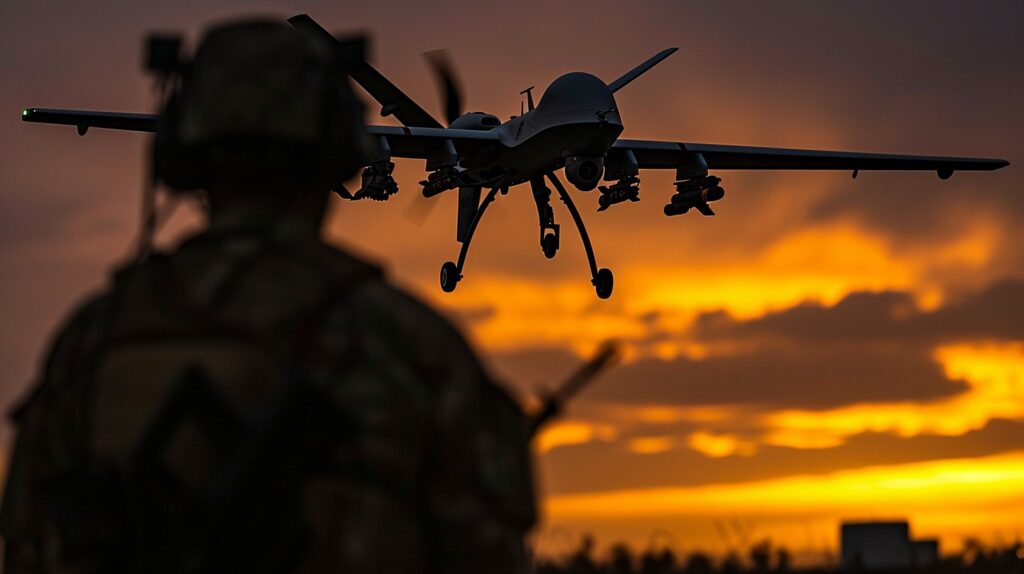
The MQ-9 Reaper, which engineers introduced shortly after, became the backbone of American drone warfare. With a range exceeding 1,000 miles, the capacity to carry thousands of pounds of weapons, and a flight endurance of over 24 hours, the Reaper demonstrated how unmanned weapons could project sustained military power over vast distances.
Throughout the following years, drone strikes fundamentally reshaped how military commanders conducted counterterrorism operations across multiple continents.
The Democratization of Drone Warfare
What changed the global equation was not just technological advancement — it was accessibility. Drone warfare stopped being the exclusive domain of superpowers. Smaller nations and even non-state actors began acquiring armed drones.
Turkey’s Bayraktar TB2 became a game-changer. Affordable, effective, and battle-proven, the TB2 demonstrated that a relatively inexpensive drone — costing a fraction of a conventional fighter jet — could destroy advanced military equipment worth hundreds of millions of dollars.
This democratization of drone warfare has fundamentally altered the balance of military power between nations, and it continues to reshape that balance as drone technology becomes cheaper and more capable with each passing year.
Drone Warfare in Modern Conflicts: Lessons Already Learned
Ukraine: The Template for Future Drone Wars
The Russia-Ukraine conflict became the world’s first large-scale conventional war where drone warfare played a central and decisive role. Both sides deployed thousands of drones of all types, turning the conflict into a live testing ground for the future of unmanned warfare.
Ukraine used combat drones to destroy Russian armored columns in the early phases of the war. Both sides later deployed loitering munitions — kamikaze drones that hover over battlefields before diving into targets — at unprecedented scale.
Russia deployed kamikaze drone swarms to attack power infrastructure, demonstrating how drone warfare could systematically destroy civilian energy systems. Ukraine responded by building its own domestic drone industry at remarkable speed, producing thousands of cheap FPV (First Person View) drones that engineers modified as lethal weapons — costing as little as a few hundred dollars yet capable of destroying tanks worth millions.
The lesson is permanent and clear: drone warfare has equalized the battlefield in ways that military history has never witnessed before.
The Middle East: Drones as Tools of Asymmetric Warfare
In the Middle East, drone warfare has become the primary tool of asymmetric conflict — where weaker non-state actors use drones to challenge much stronger conventional militaries.
Coordinated drone attacks on critical oil infrastructure demonstrated the catastrophic potential of unmanned weapons against civilian energy systems, temporarily disrupting global oil supplies. Iran-backed groups across the region have consistently used armed drones to strike targets that would otherwise sit far beyond their conventional military reach.
These conflicts have permanently established that drone warfare is not a tool reserved for wealthy superpowers — virtually any armed group with sufficient motivation and modest resources can access it.
The Future of AI-Powered Autonomous Drones: Where Drone Warfare Is Heading
From Remote-Controlled to Self-Deciding
The most significant development shaping the future of drone warfare is the integration of Artificial Intelligence. Human operators still make final decisions about when and what to strike with current drones. The next generation of drones will increasingly make those decisions themselves — and this trajectory will only accelerate.
Military engineers are developing AI-powered autonomous drones to:
- Identify and classify targets using computer vision and machine learning
- Navigate complex environments without GPS or human guidance
- Coordinate with other drones in sophisticated swarm formations
- Adapt to changing battlefield conditions in real time
- Operate in communications-blackout zones where human control becomes impossible
- Execute entire missions from takeoff to strike without any human input
Several nations already deploy semi-autonomous drone systems, and fully autonomous systems are no longer a distant theoretical possibility — multiple major powers actively develop them.
Swarm Warfare: The Most Dangerous Evolution
Perhaps the most strategically significant development in the future of drone warfare is swarm technology — the coordination of hundreds or thousands of small drones acting as a single intelligent system.
A drone swarm operates like a hive mind. Individual drones communicate with each other, share information, adapt their behavior collectively, and overwhelm targets through sheer numbers. Traditional air defense systems — engineers designed them to track and intercept individual threats — struggle enormously against coordinated swarms.
Imagine hundreds of small drones simultaneously attacking a naval vessel, an airbase, or a city’s power grid from multiple directions at once. This is not a future scenario — multiple military powers actively develop and test this capability right now. Military planners rank drone swarms among the most serious and immediate emerging threats to national security.
Hypersonic Drones: Speed as the Ultimate Weapon
Beyond AI, the trajectory of drone warfare includes hypersonic unmanned vehicles — drones that travel at speeds above Mach 5, five times the speed of sound. At these velocities, current missile defense systems have virtually no time to respond.
When military forces deploy these weapons at full scale, they will strike virtually any target on Earth within minutes, with almost zero possibility of interception. These strategic implications for global security run deep — and they deeply destabilize the international order.
Expanding Beyond the Sky
Drone warfare does not stop at the skies. The battlefield of the near future will see unmanned systems operating across all domains simultaneously:
- Underwater drones: Autonomous submarines that lay mines, track enemy vessels, and execute naval attacks
- Surface drones: Unmanned boats that navies deploy for combat and maritime blockades
- Space drones: Unmanned spacecraft that conduct surveillance, disrupt communications, and potentially deploy orbital weapons
- Ground robots: Autonomous armed vehicles that operate in urban combat and logistics roles
The unmanned warfare revolution extends far beyond aerial drones — it reshapes every dimension of military conflict.
Ethical and Legal Issues of Drone Warfare: The Moral Questions We Cannot Ignore
Lowering the Threshold for War
One of the most serious ethical issues of drone warfare is that it makes starting a war psychologically and politically easier. When soldiers face no personal risk, the barriers to using military force decrease significantly.
Governments face enormous domestic pressure when soldiers come home in body bags. When only machines face risk, that pressure disappears entirely. Critics consistently argue that drone warfare has made nations far more willing to use lethal force in situations where they might previously have pursued diplomatic solutions.
This dynamic — sometimes called the “PlayStation mentality” — raises profound questions about the dehumanization of killing and the gradual erosion of restraint in armed conflict. As drones grow more capable and more common, this problem will only deepen.
Civilian Casualties and the Accuracy Myth
Proponents of drone warfare consistently argue that precision strikes minimize civilian casualties compared to conventional bombing. The reality is far more complicated and troubling.
Independent organizations investigating drone strikes across multiple countries have documented thousands of civilian deaths over years of operations. Military intelligence frequently misidentifies targets, and the legal framework governing when and how nations can conduct drone strikes remains dangerously unclear.
Who bears legal responsibility when an autonomous drone kills civilians? The programmer who wrote the targeting algorithm? The military commander who authorized the mission? The nation that deployed the system? International law provides no clear answers — and the longer those answers remain absent, the more civilian lives will fall into that gap.
Extrajudicial Killing and State Sovereignty
Drone warfare raises fundamental questions about state sovereignty and extrajudicial killing that grow more urgent with each passing conflict.
When a nation conducts drone strikes in a country it formally has no war with — without informing that country’s government and without any judicial process — does it violate international law? Does it commit an act of war against a sovereign nation?
These questions carry no clear legal resolution, and as more nations develop strike drone capabilities, the precedents nations set today will determine whether targeted killings by unmanned weapons become an accepted and unregulated norm of international relations.
The Automation of Death: Killer Robots and Human Dignity
The deepest ethical question surrounding the future of drone warfare is whether humanity should ever permit machines to make life-and-death decisions autonomously.
Fully autonomous lethal systems — widely called “killer robots” — remove human judgment from the act of killing entirely. Military ethicists, human rights organizations, and international law experts broadly agree that this crosses a fundamental moral line. Human dignity demands that a human being remain accountable for the decision to take a human life.
The Campaign to Stop Killer Robots, which hundreds of organizations and numerous governments worldwide support, pushes for an international treaty banning fully autonomous lethal weapons. So far, the major military powers that develop these systems resist any binding agreement — and the window for effective regulation continues to close.
Dangers Ahead: The Conflicts of Tomorrow and the Threat of Drone Warfare Escalation
The Proliferation Crisis
The greatest structural danger in drone warfare is proliferation — the continuous spread of armed drone technology to an ever-growing number of state and non-state actors.
As drone technology becomes cheaper, more capable, and more widely available with each passing year, the risk of drone warfare spreading to new conflicts grows relentlessly. Terrorist organizations, criminal cartels, and extremist groups already experiment with commercially available drones that they modify as weapons. The barrier to entry for devastating drone attacks does not just fall — it approaches zero.
No technological solution to proliferation exists. Only international agreements, export controls, and diplomatic frameworks can slow it — and those mechanisms currently lag far behind the pace of the technology itself.
Great Power Conflict: The Drone Arms Race
The most dangerous potential future conflict involving drone warfare involves a direct confrontation between major powers, particularly in contested regions such as the Taiwan Strait or the South China Sea.
China has invested massively and consistently in drone warfare capabilities. Its combat drones rival Western systems in performance, while its engineers lead drone swarm research among the most advanced programs anywhere in the world. A great power conflict would almost certainly trigger drone warfare at a scale and intensity humanity has never previously witnessed — from hypersonic strike drones to massive swarm attacks on naval carrier groups.
Military analysts consistently warn that neither side has fully grasped the escalation risks that large-scale autonomous drone warfare between nuclear-armed powers carries.
Infrastructure Attacks: Civilian Life as the Battlefield
One of the most alarming trajectories in drone warfare is the systematic targeting of civilian infrastructure — power grids, water treatment facilities, communication networks, financial systems, and energy production facilities.
A coordinated drone swarm attack on a major nation’s power grid could plunge millions of people into darkness, disable hospitals, crash financial markets, and create widespread social chaos — all without a single soldier crossing a border. This form of drone warfare deliberately blurs the line between military action and terrorism, and current international law provides almost no meaningful protection against it.
As drone technology continues to improve, this threat will grow more severe. Modern civilization’s infrastructure is becoming an increasingly accessible and attractive target for drone warfare.
The Risk of Miscalculation and Accidental War
As autonomous drone systems spread across more militaries, the risk of accidental escalation grows alongside them. An AI-powered drone that misidentifies a civilian aircraft as a military target, or one that autonomously responds to a perceived threat in a way its operators never intended, could trigger a crisis between nuclear-armed nations before any human being has a chance to intervene.
Drone incidents in contested airspace already increase in frequency. As unmanned systems proliferate and their autonomy expands, the probability of a miscalculation escalating into broader conflict — potentially between nuclear powers — grows with every passing year.
The Arms Race With No Exit
The world has locked itself into a drone warfare arms race that mirrors the nuclear arms race of the Cold War era — but one crucial and terrifying difference separates them: the technology is far more accessible, and the threshold for use is incomparably lower.
Nations simultaneously develop more capable offensive drone systems and more sophisticated counter-drone defenses — laser systems, electronic jamming, AI-powered interceptors, and directed energy weapons. Each advance in offense triggers a corresponding advance in defense, in a cycle that consumes vast national resources while leaving the world no more secure.
Unlike nuclear weapons, where the doctrine of Mutually Assured Destruction (MAD) built a grim but effective deterrence framework, drone warfare has no equivalent. Actors conduct small-scale drone attacks with plausible deniability, making retaliation and crisis management far more complex and unpredictable than in any previous era of military competition.
What Must Happen: Governing Drone Warfare Before It Governs Us
The Need for International Frameworks
The world urgently needs binding international agreements governing drone warfare before technology outpaces any possibility of effective regulation. The global community must build clear frameworks that address:
- Autonomous weapons bans or strict limitations on AI systems making lethal decisions without human oversight
- Proliferation controls preventing armed drone technology from reaching non-state actors and unstable regimes
- Rules of engagement establishing when and where drone strikes are legally permissible under international law
- Accountability mechanisms determining legal responsibility when drone strikes kill civilians
- Transparency requirements compelling nations to disclose drone programs and operations
The Window Is Closing
Every year without effective governance allows more nations to acquire drone capabilities, more autonomous systems to enter deployment, and more precedents to form that normalize the unregulated use of unmanned lethal force.
The window for meaningful international regulation of drone warfare remains open — but it will not stay open indefinitely. The decisions that leaders make now, in boardrooms, legislatures, and international forums, will determine whether drone warfare becomes a governed tool of legitimate military power or an uncontrollable force that makes human conflict more frequent, more destructive, and ultimately more catastrophic.
Conclusion: Drone Warfare and the Future of Human Conflict
The rise of drone warfare represents one of the most profound transformations in the entire history of human conflict. From the primitive unmanned aircraft of the First World War to AI-powered autonomous swarms of the present day, unmanned weapons have evolved from curiosities into the defining military technology of the modern era — and their evolution shows no signs of slowing.
Drone warfare has democratized military power, lowered the threshold for armed conflict, created ethical and legal dilemmas that the world’s institutions have not yet resolved, and introduced escalation risks that diplomacy has not yet caught up with.
The technology itself carries no moral weight — it is neither good nor evil. How humanity chooses to govern, regulate, and deploy it will determine whether drone warfare becomes a tool of genuine precision that reduces overall casualties — or an uncontrollable force that makes conflicts more frequent, more indiscriminate, and ultimately more dangerous for every human being on the planet.
The age of drone warfare has arrived. It will not end. It will only deepen, expand, and grow more sophisticated. The only meaningful question remaining is whether humanity will find the wisdom and the will to govern this revolution before it permanently governs us.