When physicist Paul Dirac predicted the existence of antimatter in 1928, even he was skeptical about whether his mathematical equations described anything real. Just four years later, Carl Anderson discovered the positron—the antiparticle counterpart of the electron—in cosmic ray experiments, confirming one of the most startling predictions in physics. Today, this exotic substance sits at the intersection of our deepest cosmological mysteries and our most practical medical technologies.
What Exactly Is Antimatter?
Antimatter is not some exotic substance from science fiction—it’s as fundamental to physics as ordinary matter. Every particle of matter has an antiparticle twin with identical mass but opposite charge and quantum properties. Electrons have positrons, protons have antiprotons, and neutrons have antineutrons.
The relationship between matter and its opposite is like looking at the universe through a mirror that reverses certain properties. When a particle meets its antiparticle, they annihilate each other in a burst of pure energy, converting their entire mass into photons according to Einstein’s famous equation E=mc². This complete conversion makes it the most efficient energy source theoretically possible—far beyond anything chemical or even nuclear reactions can achieve.
The Great Cosmic Mystery
Here’s where things become genuinely puzzling: according to our understanding of physics, the Big Bang should have created equal amounts of matter and antimatter. If that had been the case, everything would have annihilated shortly after the universe began, leaving only energy. Yet here we are, in a universe made almost entirely of matter.
This asymmetry represents one of the most profound unsolved problems in physics. Somewhere in the first fractions of a second after the Big Bang, something broke the symmetry. For every billion matter-antimatter pairs that annihilated, one extra matter particle survived. That tiny surplus became everything we see today—every star, planet, and living thing.
Physicists have proposed various explanations involving subtle differences in how matter and its opposite behave, particularly in their decay processes. Experiments at facilities like CERN are meticulously comparing the properties of particles and antiparticles, looking for any difference that might explain why we exist.
Creating and Trapping Antimatter
Despite its rarity in nature, scientists routinely create antiparticles in particle accelerators. When high-energy particles collide, they can produce particle-antiparticle pairs from pure energy. Facilities like CERN’s Antimatter Factory generate millions of antiprotons daily.
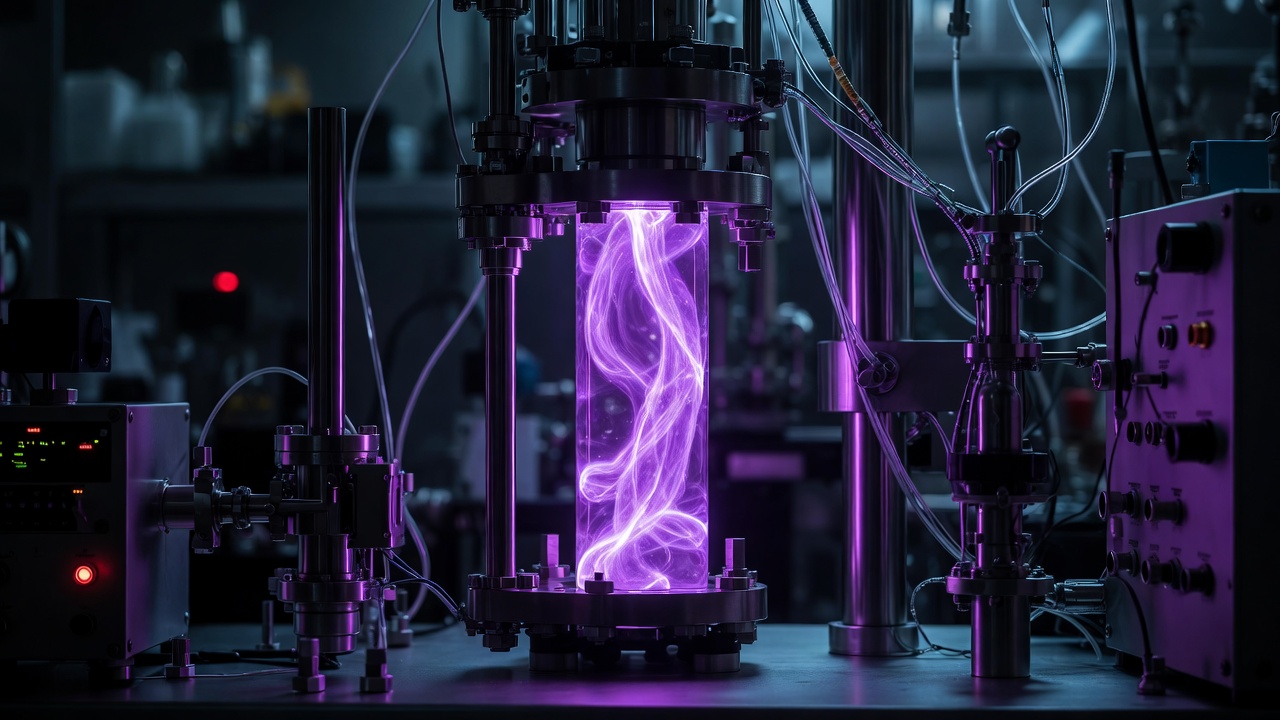
The challenge isn’t making it—it’s keeping it around. The moment antiparticles touch ordinary matter, annihilation occurs. Scientists must trap them using powerful magnetic fields that hold them suspended in ultra-high vacuum chambers, never allowing them to touch the walls.
In recent years, researchers have achieved remarkable milestones: creating and storing antihydrogen atoms (an antiproton orbited by a positron) for over a year, and even cooling these atoms to near absolute zero. These achievements allow scientists to study their properties in unprecedented detail, including whether they fall upward or downward in Earth’s gravity—a question that sounds absurd but must be verified experimentally.
Antimatter in Medicine
While this might sound purely theoretical, it’s already saving lives. Positron Emission Tomography (PET) scans, a routine medical imaging technique, rely on antiparticles. Patients receive a radioactive tracer that emits positrons. When these positrons encounter electrons in the body, they annihilate, producing gamma rays that detectors capture to create detailed images of metabolic activity. This technique is invaluable for detecting cancer, examining brain function, and diagnosing heart disease.
The Energy Dream and Reality
The complete conversion of mass to energy makes this substance theoretically perfect for energy production and space propulsion. A single gram annihilating with a gram of matter would release energy equivalent to a 43-kiloton nuclear explosion—roughly three times the Hiroshima bomb.
This staggering energy density has inspired countless science fiction stories about antimatter-powered starships. The reality, however, is far more challenging. Creating antiparticles requires enormous energy inputs—far more than you could ever extract from them. Current technology would require the entire annual energy output of the United States to produce just a few grams. It isn’t an energy source; it’s an incredibly inefficient energy storage medium.
Even if we could produce it cheaply, storing it safely presents enormous challenges. Any containment failure would result in instant annihilation. For now, propulsion and power using this technology remain in the realm of theoretical physics and engineering speculation.
Studying the Fundamental
Beyond practical applications, antiparticles provide a crucial testing ground for our understanding of physics. By comparing the behavior of particles and antiparticles with extreme precision, scientists probe the fundamental symmetries of nature.
Does this opposite form of matter fall down in gravity like regular matter, or might it somehow behave differently? Experiments like CERN’s ALPHA-g are actively investigating this question. Do antihydrogen atoms have exactly the same spectral lines as hydrogen? The ALPHA collaboration has confirmed they do, to within experimental precision, but scientists continue pushing for greater accuracy.
These might seem like esoteric questions, but they test whether our most fundamental theories are complete. Any difference between matter and its opposite beyond their obvious charge and quantum properties could point toward new physics beyond the Standard Model.
The Road Ahead
Research into antiparticles continues to advance on multiple fronts. Scientists are working to create more complex atoms, develop better trapping techniques, and achieve ever-more-precise measurements. Each improvement brings us closer to understanding why the universe chose matter over its opposite.
Meanwhile, practical applications continue expanding. Researchers are exploring whether antiparticle beams might offer advantages in cancer treatment over conventional radiation therapy. The intense, focused energy of particle-antiparticle annihilation could potentially target tumors with unprecedented precision.
Conclusion
Antimatter reminds us that the universe is stranger and more subtle than common sense suggests. It challenges our understanding of why anything exists at all and pushes the boundaries of what we can measure and manipulate in our laboratories. From the cosmic question of why we have a universe to the very practical business of medical imaging, antiparticles bridge the gap between fundamental physics and everyday life.
The story is still being written. As our experimental capabilities improve and our theories become more refined, we may finally solve the mystery of the universe’s matter-antimatter imbalance. Or we might discover something even more surprising lurking in the precise behavior of these mirror particles. Either way, this exotic form of matter continues to be one of physics’ most fascinating puzzles—a window into both the universe’s earliest moments and the deepest principles that govern reality.