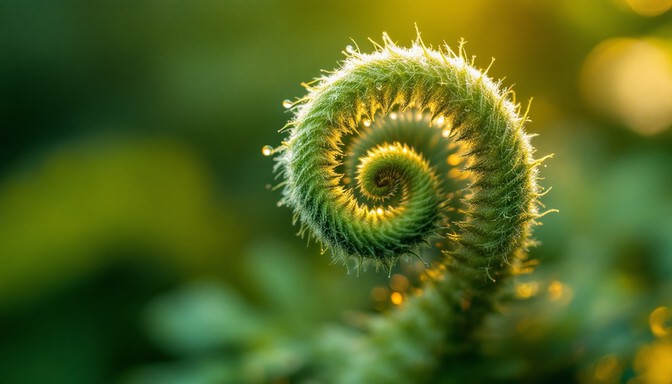
Nature’s perfect engineering surrounds us everywhere we look. When engineers face complex challenges, they increasingly turn to the ultimate designer: nature itself. After billions of years of trial and error through evolution, nature’s perfect engineering has created designs that human technology is only beginning to understand. From the microscopic structure of a butterfly wing to the architecture of a termite mound, these engineering solutions are elegant, efficient, and surprisingly sophisticated. Let’s explore how nature’s perfect engineering continues to amaze and inspire innovation.
What Is Biomimicry? Learning from Nature’s Perfect Engineering
Before we dive into specific examples, let’s understand biomimicry—the practice of learning from and mimicking nature’s strategies to solve human problems. Nature has already solved many of the challenges we face today: how to create strong yet lightweight structures, how to move efficiently through air and water, how to regulate temperature without electricity, and how to build sustainable systems that produce zero waste.
Nature doesn’t just create functional designs; it creates optimal ones. Every feature exists for a reason, refined over millions of years of natural selection. If a design wasn’t efficient, the species wouldn’t have survived.
The Honeycomb: Nature’s Perfect Engineering for Maximum Strength
Nature’s Perfect Engineering Marvel: The Honeycomb Structure
Bees build their honeycombs using hexagonal cells, and this isn’t by accident. The hexagon is nature’s perfect shape for several reasons:
Why hexagons are perfect:
- They tessellate perfectly (fit together without gaps)
- They use the least amount of wax to create the most storage space
- They provide maximum structural strength with minimum material
- They distribute weight evenly across the structure
A honeycomb can support 25 times its own weight. Engineers have adopted this hexagonal pattern in aerospace engineering, creating honeycomb panels for aircraft and spacecraft that are incredibly strong yet remarkably light.
Human Applications
Modern applications of honeycomb engineering include:
- Aircraft and spacecraft interior panels
- Packaging materials that absorb shock
- Lightweight construction materials for buildings
- Racing car chassis and boat hulls
- Snowboards and skis
The Kingfisher’s Beak: Nature’s Perfect Engineering Solves High-Speed Design
Nature’s Solution to Sonic Problems
The Japanese bullet train (Shinkansen) had a serious problem. When the train exited tunnels at high speed, it created a loud sonic boom that disturbed nearby residents and violated noise pollution regulations. Engineers were stuck until they observed the kingfisher bird.
Kingfishers dive from air into water at high speeds to catch fish, moving between two different density mediums without creating a splash. Their secret? The shape of their beak—a long, narrow, streamlined design that gradually changes the air pressure around it.
Engineering Breakthrough
Engineers redesigned the front of the bullet train to mimic the kingfisher’s beak. The results were remarkable:
- 30% reduction in air resistance
- 15% less electricity consumption
- Eliminated the sonic boom problem
- Train actually went 10% faster
- Quieter operation overall
This is nature’s perfect engineering at work: solving multiple problems with one elegant solution.
Spider Silk: Nature’s Perfect Engineering Creates Super Materials
Nature’s Perfect Engineering: Super Material Design
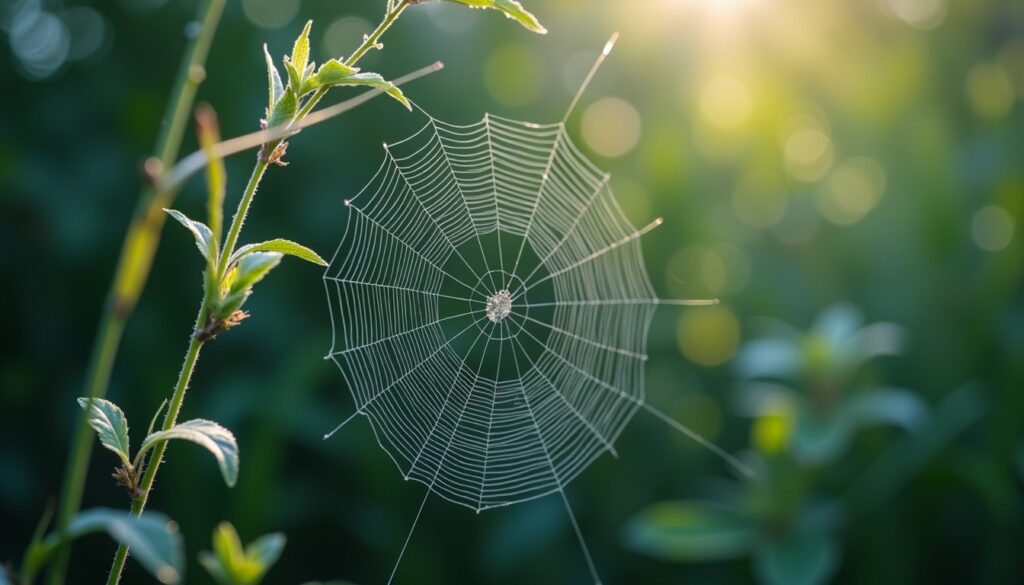
Spider silk is one of the most remarkable materials in nature. Pound for pound, it’s stronger than steel, more elastic than rubber, and tougher than Kevlar. Even more impressive? Spiders produce it at room temperature using only protein and water, while humans need high temperatures and toxic chemicals to create similar synthetic materials.
Spider silk properties:
- Five times stronger than steel by weight
- Can stretch up to 40% of its length without breaking
- Completely biodegradable
- Produced using minimal energy
- Self-assembles at molecular level
Future Applications
Scientists are working to recreate spider silk for:
- Medical sutures that dissolve naturally
- Lightweight body armor
- Biodegradable fishing nets
- Artificial tendons and ligaments
- Parachute cords and ropes
- Suspension bridge cables
Termite Mounds: Natural Air Conditioning in the Desert
Perfect Natural Engineering for Climate Control
In the scorching African savanna where temperatures can reach 40°C (104°F), termites maintain their mounds at a constant 30°C (86°F) without any mechanical systems. How? Through brilliant passive architecture.
Termite mounds are engineering masterpieces with:
- Complex ventilation systems with multiple air channels
- Thick walls that insulate against extreme heat
- Strategic positioning of openings to capture breezes
- Moisture regulation systems
- Convection currents that circulate fresh air
The warm air rises through central chimneys while cooler air is drawn in from the base, creating a natural convection current that continuously ventilates the entire structure.
Architectural Inspiration from Nature’s Perfect Engineering
The Eastgate Centre in Harare, Zimbabwe, was designed based on termite mound principles. This building:
- Uses 90% less energy for ventilation than conventional buildings
- Maintains comfortable temperatures without air conditioning
- Saves tenants 20% on energy costs
- Demonstrates sustainable architecture at scale
Lotus Leaves: The Self-Cleaning Surface
Nature’s Perfect Engineering: Waterproofing Technology
Lotus leaves remain perfectly clean despite growing in muddy water. Scientists discovered that the leaf surface is covered in microscopic bumps coated with waxy crystals. This creates a super-hydrophobic (water-repelling) surface where water droplets roll off, collecting dirt particles as they go.
This “lotus effect” is nature’s self-cleaning mechanism, and it works without any chemicals or energy input.
Modern Applications
The lotus effect has inspired:
- Self-cleaning paints and coatings for buildings
- Stain-resistant fabrics and clothing
- Easy-clean bathroom tiles and glass
- Corrosion-resistant surfaces for ships
- Anti-fouling medical equipment
- Self-cleaning solar panels
Whale Fins: Reducing Drag and Increasing Efficiency
Nature’s Aerodynamic Innovation
Humpback whales are remarkably agile despite their enormous size, thanks to bumps (called tubercles) on the leading edge of their flippers. These bumps seem counterintuitive—you’d think smooth surfaces would work better—but nature knows better.
The tubercles create small vortices that:
- Reduce drag by up to 32%
- Increase lift by 8%
- Delay stalling at steep angles
- Allow tighter turning radius
- Improve overall efficiency
Engineering Applications
Whale-inspired tubercles are now used in:
- Wind turbine blades (20% more efficient)
- Airplane wings and helicopter rotors
- Fans and ventilation systems
- Surfboard fins
- Hydroelectric turbines
- Ship rudders and submarine fins
Gecko Feet: Adhesion Without Glue
Nature’s Perfect Engineering for Adhesion Solution
Geckos can walk up walls and across ceilings, supporting their entire body weight with just one toe. Their secret lies in millions of microscopic hair-like structures called setae on their feet. These create van der Waals forces—weak molecular attractions that become incredibly strong when multiplied millions of times.
Gecko adhesion features:
- Works on almost any surface
- No sticky residue left behind
- Can be turned on and off instantly
- Self-cleaning
- Works in wet or dry conditions
- Reusable indefinitely
Future Technology
Researchers are developing gecko-inspired:
- Reusable adhesive tapes (no glue needed)
- Wall-climbing robots for rescue operations
- Gripping devices for surgery
- Adhesives that work in space
- Bandages that stick to wet tissue
- Tire designs with better grip
Bird Bones: Perfect Natural Engineering for Lightweight Structures
Nature’s Weight-Saving Design
Birds need to be light to fly, but they also need strong skeletons. Nature’s solution? Hollow bones with internal struts arranged in a lattice pattern, similar to the Eiffel Tower’s structure. This design provides maximum strength with minimum weight.
Some bird bones are so well engineered that they’re stronger than solid mammal bones of the same weight. The internal architecture distributes stress perfectly, preventing breakage while saving weight.
Engineering Applications
This principle is used in:
- Aircraft frame construction
- Automotive lightweight components
- Building structures and bridges
- Bicycle frames
- Sports equipment
- Medical implants and prosthetics
Sharkskin: Nature’s Perfect Engineering Reduces Friction in Fluid Dynamics
Nature’s Perfect Engineering: Drag-Reduction Technology
Sharkskin isn’t smooth—it’s covered in tiny tooth-like scales called dermal denticles arranged in a specific pattern. This rough texture actually reduces drag in water by creating micro-vortices that allow water to flow more smoothly over the shark’s body.
This counterintuitive design makes sharks incredibly efficient swimmers, allowing them to move faster while using less energy.
Real-World Applications
Sharkskin-inspired technology includes:
- Olympic swimsuits (now banned for being too effective)
- Ship hull coatings that reduce fuel consumption by 5-10%
- Medical surfaces that resist bacterial growth
- Pipeline interiors for better fluid flow
- Aircraft surfaces for reduced air resistance
- Wind turbine blade coatings
The Nautilus Shell: Perfect Logarithmic Spirals
Nature’s Mathematical Precision
The nautilus shell grows in a perfect logarithmic spiral (also called the golden spiral), following the Fibonacci sequence. This pattern allows the shell to grow larger while maintaining the same proportional shape—a property called self-similarity.
This design is:
- Extremely strong and resistant to pressure
- Efficiently uses materials
- Provides buoyancy control
- Protects the animal as it grows
- Mathematically optimal
Engineering Inspiration
The nautilus spiral appears in:
- Antenna design for better signal reception
- Spiral stairs and architectural features
- Speaker systems for optimal sound distribution
- Hydraulic systems and pumps
- Industrial mixing equipment
- Hurricane modeling and weather prediction
Plant Root Systems: Efficient Networks
Nature’s Distribution Infrastructure
Plant roots form incredibly efficient networks for distributing water and nutrients. They:
- Branch fractally for maximum surface area
- Minimize the total length of the network
- Distribute resources optimally
- Adapt to changing conditions
- Self-repair when damaged
This is the same optimization problem engineers face when designing transportation networks, power grids, or internet infrastructure.
Modern Applications
Root system principles inspire:
- Urban traffic flow optimization
- Computer network architecture
- Supply chain logistics
- Blood vessel design for artificial organs
- Crack-resistant concrete
- Water distribution systems
Woodpecker Skulls: Impact Protection
Nature’s Shock Absorption System
Woodpeckers slam their beaks into trees at speeds up to 20 mph, experiencing forces of 1,200 Gs (humans get concussions at 100 Gs). Yet they never get brain damage. Their secret is a combination of features:
- Spongy bone that absorbs shock
- Minimal fluid space around the brain (prevents sloshing)
- Strong muscles that tighten before impact
- Skull structure that distributes force away from the brain
- Tongue that wraps around the skull for extra support
Safety Applications
Woodpecker-inspired designs are used in:
- Improved sports helmets
- Car crash protection systems
- Packaging for fragile electronics
- Military body armor
- Earthquake-resistant buildings
- Flight recorder (“black box”) cases
Fireflies: Efficient Light Production
Nature’s LED Technology
Fireflies produce light through bioluminescence with nearly 100% efficiency—almost all the energy goes into light production with virtually no wasted heat. In contrast, traditional incandescent bulbs are only 5% efficient, with 95% of energy wasted as heat.
The firefly’s light-producing organs have a unique surface pattern that enhances light emission and reduces internal reflection.
Lighting Innovation
Scientists studying fireflies have improved:
- LED efficiency by 55% using firefly-inspired patterns
- OLED displays for phones and TVs
- Solar cell light absorption
- Fiber optic efficiency
- Medical imaging devices
- Bioluminescent markers for research
Why Nature’s Engineering Is Perfect
The Secret: Evolutionary Testing
Nature’s engineering appears perfect because it’s been tested for millions of years. Unsuccessful designs simply didn’t survive. What we see today represents solutions that have:
- Been refined through countless iterations
- Optimized for efficiency (survival depends on it)
- Solved multiple problems simultaneously
- Used minimal resources and energy
- Created zero waste (everything recycles)
- Adapted to changing conditions
Sustainable by Design
Nature’s engineering is inherently sustainable:
- Uses abundant materials (proteins, minerals, water)
- Operates at ambient temperatures
- Produces biodegradable products
- Creates closed-loop systems
- Generates no toxic waste
- Self-repairs and self-assembles
The Future: Nature-Inspired Innovation
What’s Next?
Scientists and engineers are just beginning to unlock nature’s secrets. Future innovations might include:
- Self-healing materials inspired by skin
- Buildings that grow and repair themselves like trees
- Energy systems mimicking photosynthesis
- Water purification systems based on kidneys
- Computing systems inspired by neurons
- Manufacturing processes that copy coral reef growth
The Biomimicry Revolution
As we face challenges like climate change, resource scarcity, and pollution, nature offers proven solutions. Biomimicry isn’t just about copying nature—it’s about understanding the principles behind natural designs and adapting them to human needs.
Lessons from Nature’s Perfect Engineering
What can we learn from nature’s engineering mastery?
Simplicity is sophisticated: Nature achieves complex results through simple, elegant designs.
Multi-functionality: Natural designs often solve multiple problems simultaneously.
Efficiency is essential: When survival depends on it, there’s no room for waste.
Local resources: Nature uses what’s available nearby, reducing transportation and processing needs.
Adaptation over perfection: Nature creates solutions that work well enough and can adapt, rather than pursuing absolute perfection.
Integration, not isolation: Every part connects to and supports the whole system.
Conclusion: The Ultimate Designer
After 3.8 billion years of research and development, nature has created engineering solutions that we’re only beginning to appreciate. From the microscopic architecture of butterfly wings to the grand design of forest ecosystems, nature demonstrates that the best engineering is often the simplest, most efficient, and most sustainable.
As we face unprecedented global challenges, perhaps our best strategy is to look around us. The answers to our most pressing problems—clean energy, sustainable materials, efficient transportation, climate adaptation—may already exist in nature, waiting to be discovered and understood.
Nature isn’t just a source of inspiration; it’s a library of proven solutions, a testament to what’s possible when design is optimized over deep time. The more we study nature’s perfect engineering, the more we realize we have much to learn from the ultimate designer: evolution itself.
The question isn’t whether nature’s engineering is perfect—it’s whether we’re wise enough to learn from it before it’s too late.
Key Takeaways:
- Nature has perfected engineering solutions over billions of years of evolution
- Biomimicry applies nature’s strategies to solve human problems
- Natural designs are efficient, sustainable, and multi-functional
- Examples range from honeycomb structures to shark skin to spider silk
- Future innovation increasingly looks to nature for inspiration
- Understanding natural engineering can help solve modern challenges sustainably
In studying nature’s perfect engineering, we discover that the most advanced technology isn’t found in laboratories or factories—it’s all around us, growing, adapting, and thriving in the natural world.